If you are condo shopping downtown, amenities can look like a bonus on paper. In real life, they shape how you park, how you budget, and how much day-to-day upkeep you take on. If you want to understand what downtown Milwaukee condo amenities actually mean for your lifestyle and monthly costs, this guide will help you sort through the details with more confidence. Let’s dive in.
Common downtown condo amenities
Downtown Milwaukee condo buildings often offer a mix of practical and lifestyle-focused features. The most common categories are parking, storage, fitness spaces, clubrooms, outdoor shared areas, and security or concierge-style services.
Recent local listings show how much variety exists from one building to the next. Some units include an assigned heated garage space and private storage, while others do not have on-site parking and rely on a separate monthly arrangement nearby. That is why it is important to read beyond the word “amenities” and ask what is truly included.
Parking and storage
Parking is one of the biggest differences between downtown Milwaukee condo buildings. According to recent Milwaukee listings, some units include one or even two indoor parking spaces, while others require owners to pay separately for nearby parking.
That difference matters more downtown than it might in a suburban setting. Milwaukee Downtown’s transportation guide shows that the area offers several ways to get around, including The Hop streetcar, Bublr Bikes, Milwaukee County Transit System buses, CONNECT 1 bus rapid transit, scooters, and the skywalk system. Even so, parking is still a recurring challenge downtown, so an assigned or heated garage stall can be a major convenience.
Storage is another useful feature to verify. A private storage locker can make condo living feel easier if you need space for seasonal items, bikes, or extras you do not want inside your unit.
Fitness and shared spaces
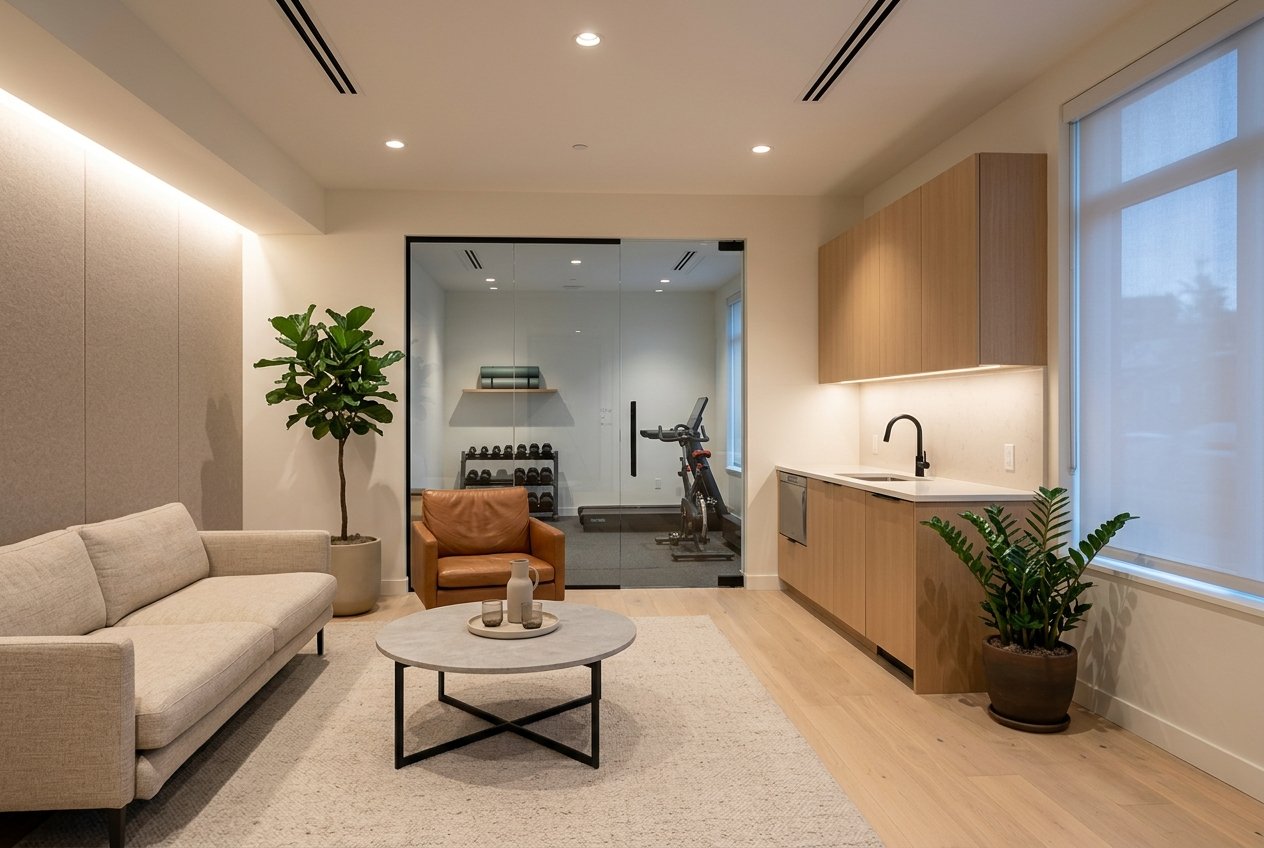
Many downtown buildings include amenities like exercise rooms, clubrooms, common green space, rooftop decks, terraces, or even pools. Recent examples in Milwaukee show a wide range, from basic fitness rooms to more full-service setups with indoor pools, screening rooms, meeting rooms, and rooftop park space.
These spaces can function like an extension of your condo. If your building has a gym, rooftop lounge, or clubroom, you may use those areas instead of paying separately for a fitness membership or looking elsewhere for gathering space. Freddie Mac explains that HOA fees often help pay for shared amenities like pools and gyms, which is why these features are typically bundled into monthly dues.
Security and concierge services
Some downtown Milwaukee buildings offer a more service-oriented setup. Recent listings show examples of buildings with security, controlled entry, concierge service, and on-site management.
For some buyers, those features are not just luxury extras. If you travel often, work long hours, or receive regular deliveries, concierge and managed-entry services can make daily life feel more convenient and lower maintenance.
How amenities affect daily life
Amenities are easiest to understand when you think about your routine. The right package depends less on what sounds impressive and more on how you actually live.
If you drive most days, parking may matter more than a rooftop deck. If you want a lower-maintenance home and value convenience, a building with stronger service and security may feel like a better fit. If you like to work out or host casually, shared fitness and social spaces may give you useful flexibility without increasing your private square footage.
Parking impacts convenience
Parking can change how smooth your day feels, especially in winter. A heated garage space can make commuting, grocery runs, and everyday errands simpler than relying on street parking or a nearby structure.
It is also important to remember that going car-light is possible for some downtown residents, but not everyone. Milwaukee Downtown notes the many mobility options available, but city overnight street parking rules still apply if your building does not provide off-street parking.
Shared spaces expand livability
A smaller condo can feel much more functional when the building includes useful shared areas. A fitness room, clubroom, terrace, or rooftop space may give you options that reduce what you need inside your unit.
That does not mean every amenity is equally valuable. The key is whether you will actually use it. A building with fewer amenities but stronger alignment with your routine may be a better fit than a building with a long list of features you rarely touch.
Security can simplify ownership
Security and concierge-style services can also support a lower-maintenance lifestyle. In buildings with controlled entry, package-friendly lobby setups, and on-site management, you may spend less time dealing with logistics yourself.
That can be especially appealing if you are downsizing, relocating, or simply want a home that feels easier to manage than a standalone property. In that way, amenities can support not just comfort, but also peace of mind.
How amenities affect monthly costs
This is where many buyers need the most clarity. Condo amenities are part of the overall cost structure, not just a list of perks.
The Consumer Financial Protection Bureau says condo or HOA dues are usually paid directly to the association and are generally not included in your mortgage payment. Those dues can range from a few hundred dollars a month to well over $1,000 depending on the community.
Condo fees vary widely downtown
Recent downtown Milwaukee listings show just how broad that range can be. Current examples include fees around $350 per month in some buildings, amounts in the $480 to $833 range in others, and low-thousands monthly dues in larger full-service towers.
That range tells you there is no single “normal” condo fee downtown. The building’s service level, the unit’s size, and what is included in the fee all influence the number.
What condo fees may cover
Recent Milwaukee listings show condo fees often cover items such as:
- Common-area insurance
- Common-area maintenance
- Water and sewer
- Trash collection
- Snow removal
- Replacement reserves
- Heat or hot water in some buildings
- Pool or recreation facility upkeep in some buildings
- Parking or parking-related access in some cases
This is one reason condo comparisons can be tricky. A higher monthly fee may cover services and costs that a suburban homeowner would pay separately.
Parking may be extra
Do not assume parking is included. Some downtown Milwaukee listings include garage parking with the unit, while others require a separate monthly parking payment.
For example, one recent downtown listing noted that the owner pays $137 per month to park in nearby structures. That kind of detail can change the true monthly cost of ownership, so it is worth confirming early.
Insurance is still separate
Condo fees do not replace your own insurance policy. Wisconsin’s Office of the Commissioner of Insurance explains that the association generally insures the building and common property, while the unit owner typically needs an HO-6 policy for the interior of the unit, personal belongings, liability, and certain improvements or alterations.
That means your budget should include more than just the mortgage and condo fee. Insurance, parking, and any other separate recurring costs should all be part of the comparison.
Questions to ask before you buy
When you are comparing downtown Milwaukee condos, clear questions can help you avoid surprises later. Amenities only add value if you understand how they work and what they cost.
Here are a few smart questions to ask:
- Is parking included with the unit, leased separately, or not available on-site?
- Is the parking heated, assigned, deeded, or shared?
- Is private storage included?
- What amenities are currently available for residents to use?
- What does the monthly condo fee cover?
- Are any utilities included in the condo fee?
- Do building services include security, concierge, or on-site management?
- What insurance does the association carry, and what will you need separately?
These questions can help you compare apples to apples across buildings. They also make it easier to match a condo to your actual lifestyle instead of just reacting to a polished listing description.
The best amenity package is personal
The right downtown Milwaukee condo is not always the one with the longest amenity list. It is the one where the parking setup, shared spaces, service level, and monthly costs line up with how you want to live.
For some buyers, that means a simpler building with lower dues and one reliable parking space. For others, it means paying more each month for stronger security, more shared amenities, and a more lock-and-leave lifestyle. The goal is clarity, so you can choose confidently.
If you are weighing downtown condo options and want help sorting through fees, amenities, and the real monthly cost of ownership, Jenna Johanning can help you compare your choices with a calm, practical strategy.
FAQs
What do downtown Milwaukee condo fees usually pay for?
- Downtown Milwaukee condo fees often cover common-area insurance, maintenance, water and sewer, trash, snow removal, and reserves, with some buildings also including heat, hot water, pool service, or parking-related costs.
Is parking included in downtown Milwaukee condos?
- Not always. Recent downtown Milwaukee listings show that some condos include assigned indoor parking, while others require a separate monthly parking arrangement nearby.
Do downtown Milwaukee condo owners still need insurance?
- Yes. According to Wisconsin’s Office of the Commissioner of Insurance, condo owners typically need an HO-6 policy for the unit interior, belongings, liability, and certain improvements, even when the association insures the building.
Can you live with fewer cars in downtown Milwaukee?
- In many cases, yes. Downtown Milwaukee has transit and mobility options like The Hop, Bublr Bikes, MCTS buses, CONNECT 1, scooters, and the skywalk system, but you still need to check parking rules and costs for your building and street use.
Are condo amenities worth higher monthly fees in downtown Milwaukee?
- They can be, if you will use them and they support your lifestyle. Features like heated parking, fitness rooms, security, concierge service, and shared social spaces may offset separate costs or reduce day-to-day maintenance.
