If you are thinking about living in Downtown Milwaukee, the big question is usually not just Can I live there? It is What would my everyday life actually feel like? That is an important question, especially if you are relocating, downsizing, or deciding whether an urban lifestyle fits your next chapter. Downtown Milwaukee offers a mix of walkability, housing options, lakefront access, and built-in entertainment that can make daily life feel easier and more connected. Let’s take a closer look.
Downtown Milwaukee feels like several neighborhoods
One of the first things to know is that Downtown Milwaukee is not one single, uniform area. According to Milwaukee Downtown’s live downtown overview, the core is shaped by distinct areas including East Town, Westown, and the Historic Third Ward.
That matters because each part of downtown has its own rhythm. Some blocks feel more polished and residential, some lean more entertainment-focused, and some blend historic architecture with newer development. If you are trying to picture daily life here, it helps to think of downtown as a collection of connected districts rather than one experience.
Downtown also continues to evolve. A city planning update noted more than $4.6 billion in completed public and private projects since 2010, along with 42,275+ residents, 9,500+ new housing units, and 90,700+ estimated employees in the broader downtown area, according to the City of Milwaukee downtown plan draft. That ongoing reinvestment helps explain why downtown feels more residential than many people expect.
Daily life is built around walking
For many residents, one of the biggest perks of downtown living is how much you can do on foot. The Milwaukee RiverWalk runs 3.1 miles along both sides of the Milwaukee River, connecting downtown and the Historic Third Ward all the way to Lake Michigan.
This is not just a scenic attraction for visitors. It becomes part of regular life. You can use it for a morning walk, an after-work stroll, or an easy route to restaurants, events, and public spaces.
The Historic Third Ward is especially known for walkability. Visit Milwaukee describes the area as a historic warehouse district with 19th-century buildings, riverside patios, access to the Milwaukee Public Market, and easy RiverWalk connections. If you want a neighborhood where brunch, coffee, errands, and dinner can happen within a compact footprint, this area often stands out.
Getting around without relying on a car
A car-light lifestyle is realistic for many people who live downtown. That is especially true if your work, social plans, and day-to-day routine are centered downtown or near the lakefront.
The Hop streetcar is free to ride and gives you a simple way to move between East Town, the Historic Third Ward, Westown, and nearby destinations. Its L-Line runs every 20 minutes and offers direct access to the lakefront and attractions like the Milwaukee Art Museum, Discovery World, Veterans Park, and Henry Maier Festival Park.
Downtown transportation options go beyond the streetcar. Milwaukee Downtown’s getting around guide highlights MCTS buses, CONNECT 1, Bublr Bikes, scooters, parking options, and a 1.75-mile skywalk system. During winter, that skywalk system can make a real difference in comfort and convenience.
If you still plan to drive, downtown is not an all-or-nothing situation. Parking systems and payment options are more user-friendly than many people expect, which can make a mixed driving-and-walking routine easier to manage.
Food and nightlife are close to home
Living downtown means your dining and social options are often just a short walk away. Milwaukee Downtown points to entertainment districts like Cathedral Square, Milwaukee Street, Water Street, Old World Third Street, and the Theater District as downtown anchors.
Each area has a different feel. Milwaukee Street is known for a strong restaurant lineup, including Italian, Cuban, steakhouse, and seafood options. Water Street leans more high-energy and late-night, while Old World Third Street mixes pubs, nightlife, and historic character near sports and theater venues.
For many buyers, this is one of downtown’s biggest lifestyle advantages. You do not always need to plan a whole outing around driving, parking, and getting back home. A weeknight dinner or weekend drink can feel simple and spontaneous.
Arts and events shape the atmosphere
Downtown Milwaukee has a strong arts and events culture, and that changes what everyday life feels like. Instead of needing to travel across the metro for entertainment, you are often already close to it.
The Milwaukee Theater District includes nine performing arts venues within a walkable part of downtown. Major anchors include the Marcus Performing Arts Center, Milwaukee Rep, Bradley Symphony Center, Riverside Theater, Turner Hall Ballroom, Miller High Life Theatre, and the Baird Center.
Public art is part of the daily backdrop too. Milwaukee Downtown says there are 140+ sculptures, monuments, and murals in a walkable one-square-mile area. That gives downtown a more layered, visual feel than a purely office-centered business district.
Seasonal events also play a major role. According to Milwaukee Downtown’s live downtown page, East Town hosts events like Bastille Days, Firkin Fest, a Saturday morning farmers’ market, and the Lakefront Festival of Art. The lakefront and Third Ward also connect residents to Summerfest and ethnic festivals at Henry Maier Festival Park.
The housing mix is more varied than people assume
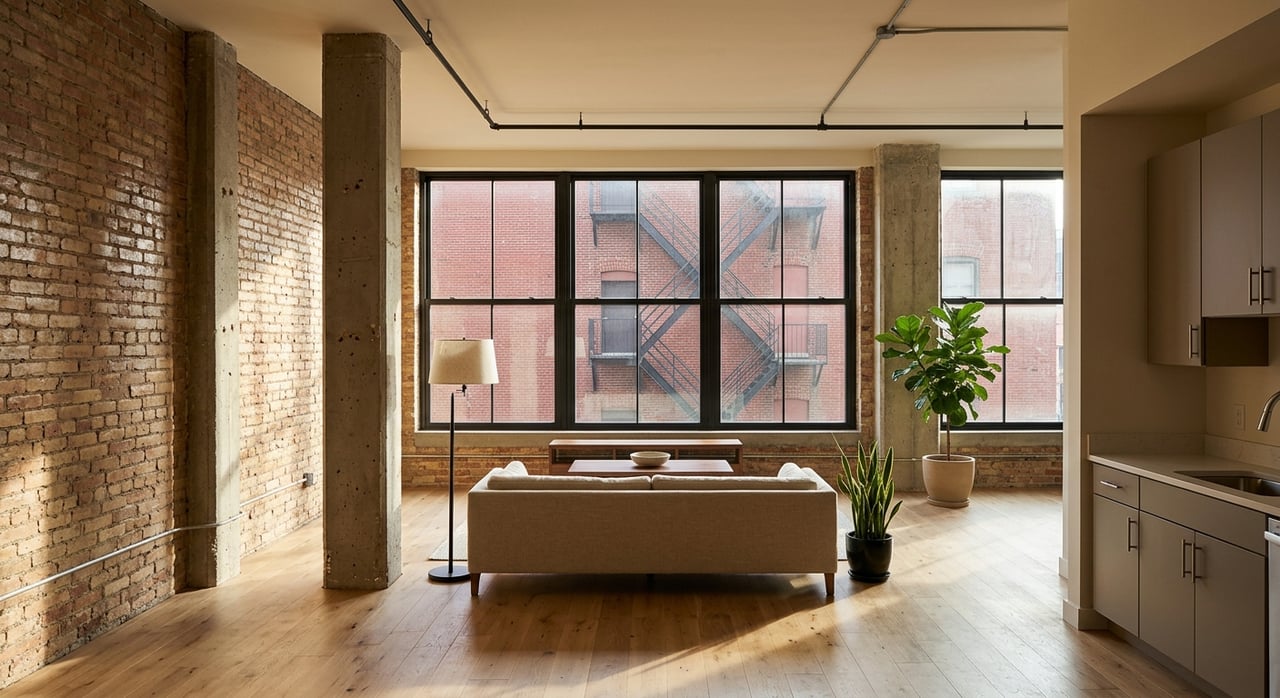
A lot of buyers picture downtown housing as only sleek high-rise apartments, but the reality is more varied. The City of Milwaukee development page describes downtown’s residential future as a mix of modern towers and historic lofts.
Recent and current projects help illustrate that range. The city highlights 333 Water, a 31-story tower with 333 homes, and The Couture, a 44-story mixed-use building with 322 apartments and retail. The Couture is also described as Wisconsin’s tallest residential building.
Adaptive reuse is another important part of the downtown story. In 2025, the city proposed support for converting 100 East Wisconsin, a former office building on the RiverWalk, into 373 residential units, including 75 workforce units, according to a City of Milwaukee housing news release.
Historic conversions continue to shape the look and feel too. The city’s Mayor’s Design Awards coverage highlights Cream City Lofts, a 40-unit apartment project created from an 1850s warehouse. That kind of adaptive reuse helps explain why downtown can feel both historic and current at the same time.
Milwaukee Downtown also reports that the city ranked 18th nationally for office-to-apartment conversions, with more than 3,200 units under construction or in the pipeline, according to its economic development update. In plain terms, downtown’s housing choices are still expanding.
What a typical weekend can look like
For many people, the appeal of downtown Milwaukee is how easy it is to build a full day without driving far. A realistic weekend might start with a riverfront walk, continue with brunch in the Third Ward, include a market stop or museum visit, and end with a show, a game, or dinner downtown.
The Milwaukee Public Market adds to that lifestyle. It includes nearly 20 independently owned vendors, local farmers and artisans, plus fresh produce, seafood, cheeses, coffee, and grab-and-go options. For some residents, it works as part errand stop and part social routine.
That mix of convenience and activity is a big reason downtown appeals to buyers who want a more connected daily rhythm. You are not just buying a home. You are choosing a pattern of life.
Who downtown Milwaukee fits best
Downtown Milwaukee is often a strong fit if you want an urban routine. According to Milwaukee Downtown, the area is well suited to people who value short walks, frequent events, nearby dining, and housing options that lean toward apartments, lofts, and condo towers.
That can be especially appealing if you are relocating and want to get oriented quickly, if you are downsizing and want less maintenance, or if you simply prefer having more to do close to home. For the right buyer, downtown can offer convenience, energy, and variety in one place.
It may be less appealing if your must-haves include a large yard, quieter residential streets, or a more suburban errand pattern. That does not make downtown better or worse. It just means lifestyle fit matters.
How to decide if downtown is right for you
The best way to evaluate Downtown Milwaukee is to think beyond square footage. Ask yourself how you want your week to feel. Do you want walkable coffee shops, easy access to events, and less dependence on your car? Or do you prefer more separation, more outdoor private space, and a slower residential pace?
It also helps to compare districts, not just buildings. East Town, Westown, and the Historic Third Ward each offer a different version of downtown living. Your ideal fit may come down to whether you want quicker lakefront access, a stronger nightlife scene, or a more historic loft-style setting.
If you are planning a move in the Milwaukee area, having a local guide can make that decision much clearer. Jenna Johanning helps buyers and sellers across Greater Milwaukee navigate life transitions with a calm, strategic approach, so you can choose a home and neighborhood that fit the way you actually want to live.
FAQs
What is daily life like in Downtown Milwaukee?
- Daily life in Downtown Milwaukee often centers on walking, dining close to home, riverfront access, events, and a mix of transit options that can reduce how often you need to drive.
Is Downtown Milwaukee walkable for residents?
- Yes. Downtown Milwaukee offers strong walkability, with connected districts, the 3.1-mile RiverWalk, and easy pedestrian access to restaurants, public spaces, and entertainment venues.
Can you live in Downtown Milwaukee without a car?
- For many residents, yes. The Hop streetcar, MCTS buses, CONNECT 1, Bublr Bikes, scooters, and walkable neighborhoods make a car-light lifestyle realistic, especially if your routine is centered downtown.
What types of homes are in Downtown Milwaukee?
- Downtown Milwaukee includes a mix of apartments, condo towers, modern residential buildings, historic lofts, and adaptive reuse projects created from older commercial and warehouse buildings.
Is Downtown Milwaukee a good fit for downsizing?
- It can be. Downtown may appeal to downsizers who want lower-maintenance living, nearby amenities, and easier access to dining, events, and everyday conveniences.
What is the Historic Third Ward like for living in Milwaukee?
- The Historic Third Ward is known for walkability, historic warehouse buildings, riverside patios, access to the Milwaukee Public Market, and strong connections to the RiverWalk and downtown amenities.
